Overview
What the project is designed to do
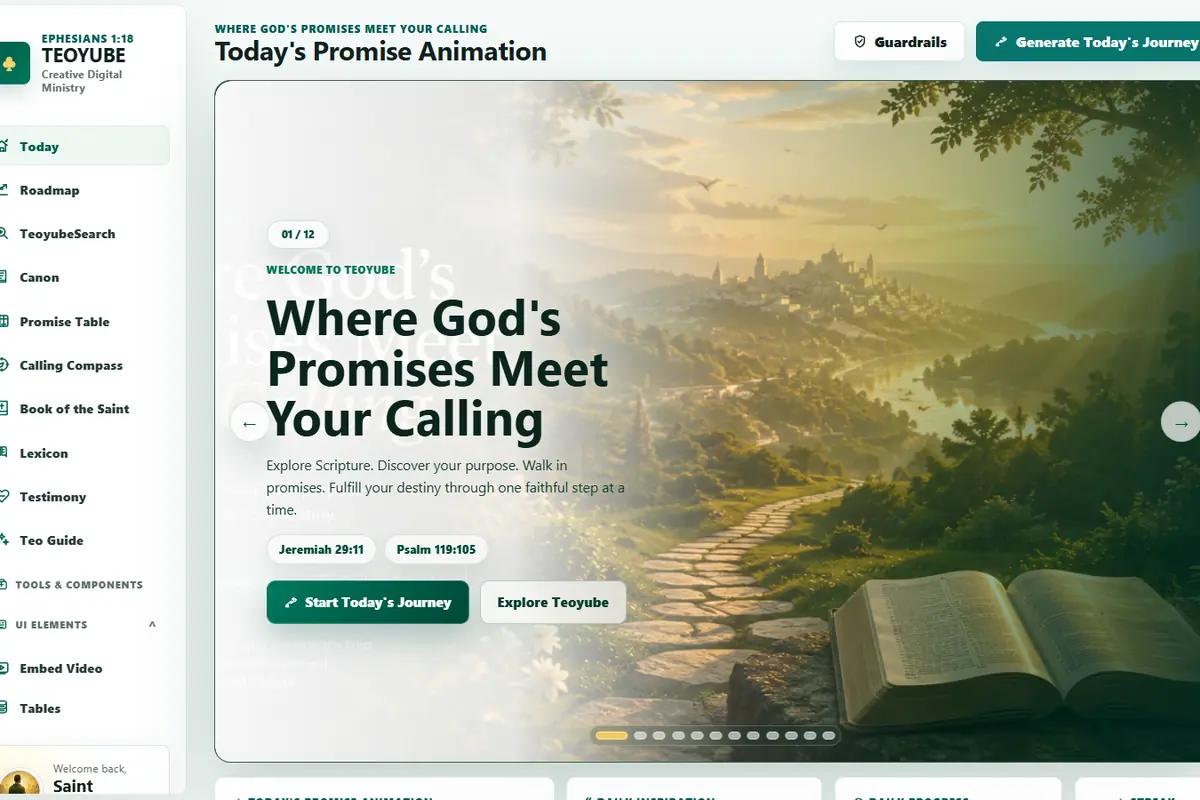
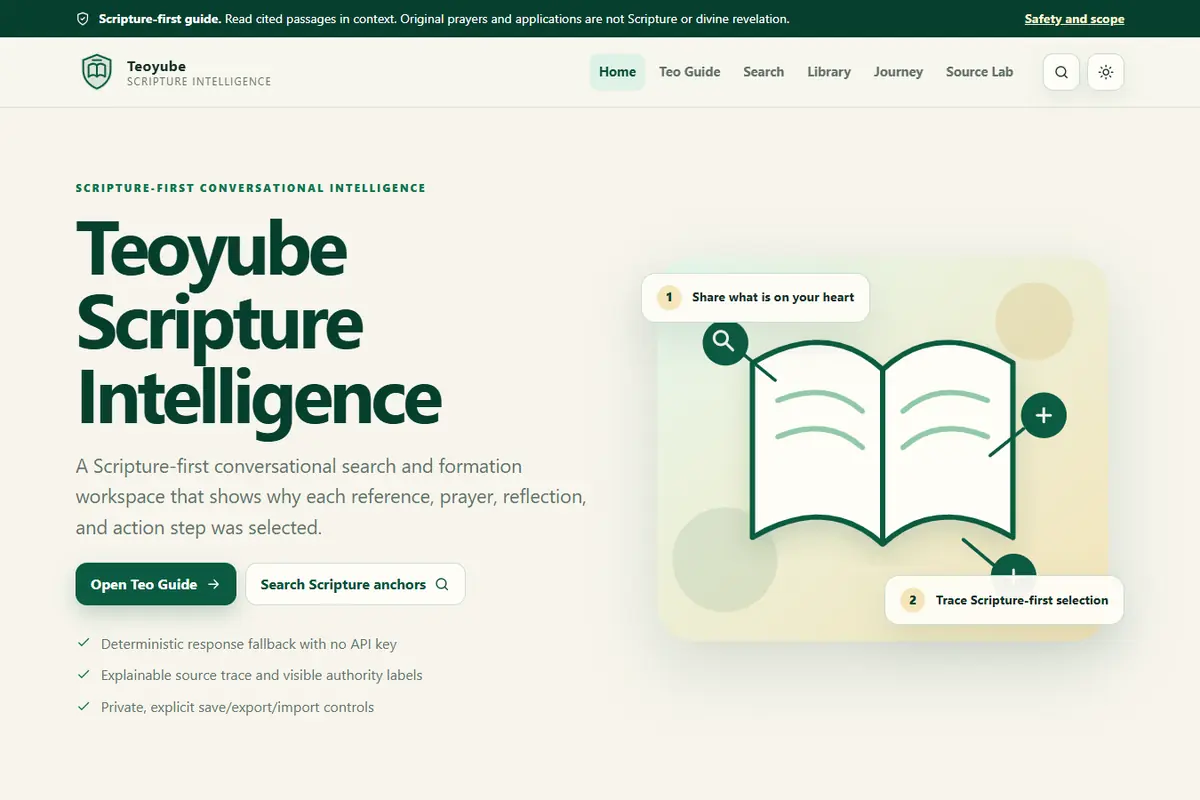
A privacy-conscious Scripture intelligence demonstration combining conversational discovery, guided reflection, source tracing, and a browser-local Journey without presenting generated guidance as pastoral care.
The Teo Guide retrieves from a curated local Scripture and guidance corpus, preserves references, and falls back to a deterministic safety-aware response path.
Twenty generated documents cover conversations, searchable references, reflection, safety, privacy, offline use, and designed error states.
Problem
What needed to change
Scripture-search experiences can lose context, obscure sources, or imply more authority than the software can responsibly provide.
Solution
How the release responds
Keep references visible, separate retrieval from optional synthesis, and pair responses with reflection steps and explicit safety boundaries.
Key features
What visitors can use
- Conversational Teo Guide with source traces
- Scripture and guidance search
- Guided reflection and local Journey
- Deterministic fallback responses
- Offline-capable shell
Implementation
How it was built
- 01
A dependency-free generator produces 20 canonical documents.
- 02
Three functions expose health, search, and guide endpoints.
- 03
Guarded AI Gateway synthesis is optional and disabled by default.
Architecture
Delivery shape
Static pages and local state are delivered from the Vercel CDN with narrow Node.js functions for health, retrieval, and guide responses.
Product boundary
What this release does not claim
- No accounts, database, analytics, uploads, or public chat
- Not a substitute for pastoral, medical, or emergency support